How It Works
Application ABIs on Shared Kernel Primitives
Scarlet translates ABI-specific interfaces into common kernel objects such as VFS nodes, sockets, tasks, devices, and events instead of placing each workload behind a separate virtual machine.
Scarlet Shell
# Running a Linux-compatible workload
$ uname -a
Linux scarlet 6.1.0-scarlet riscv64 GNU/Linux
# Sharing Scarlet-native services with compatibility workloads
$ scarlet_hello | busybox cat
Hello from Scarlet!
$ uname -a
Linux scarlet 6.1.0-scarlet riscv64 GNU/Linux
# Sharing Scarlet-native services with compatibility workloads
$ scarlet_hello | busybox cat
Hello from Scarlet!
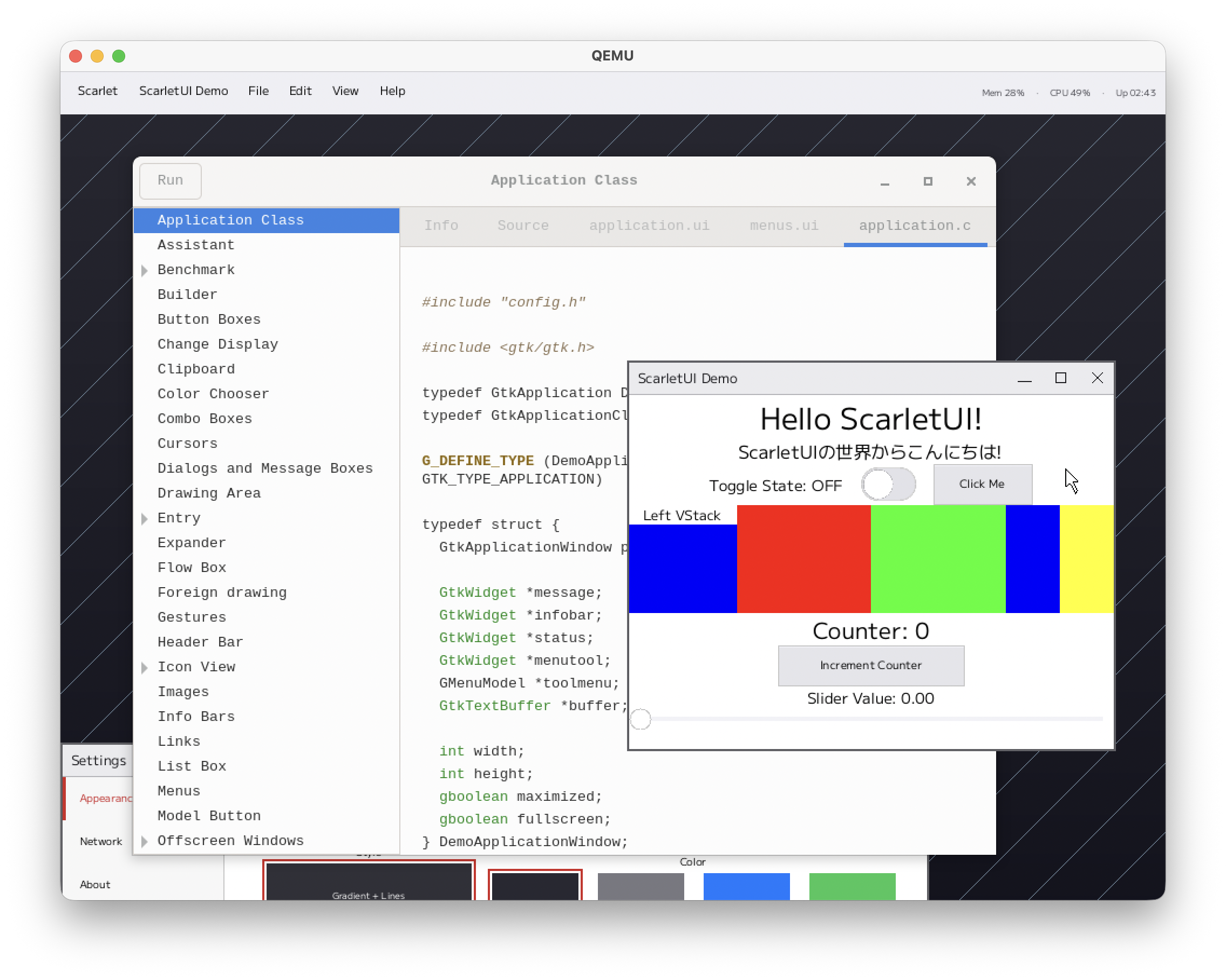
Scarlet native apps and selected Linux GUI applications running on the same desktop